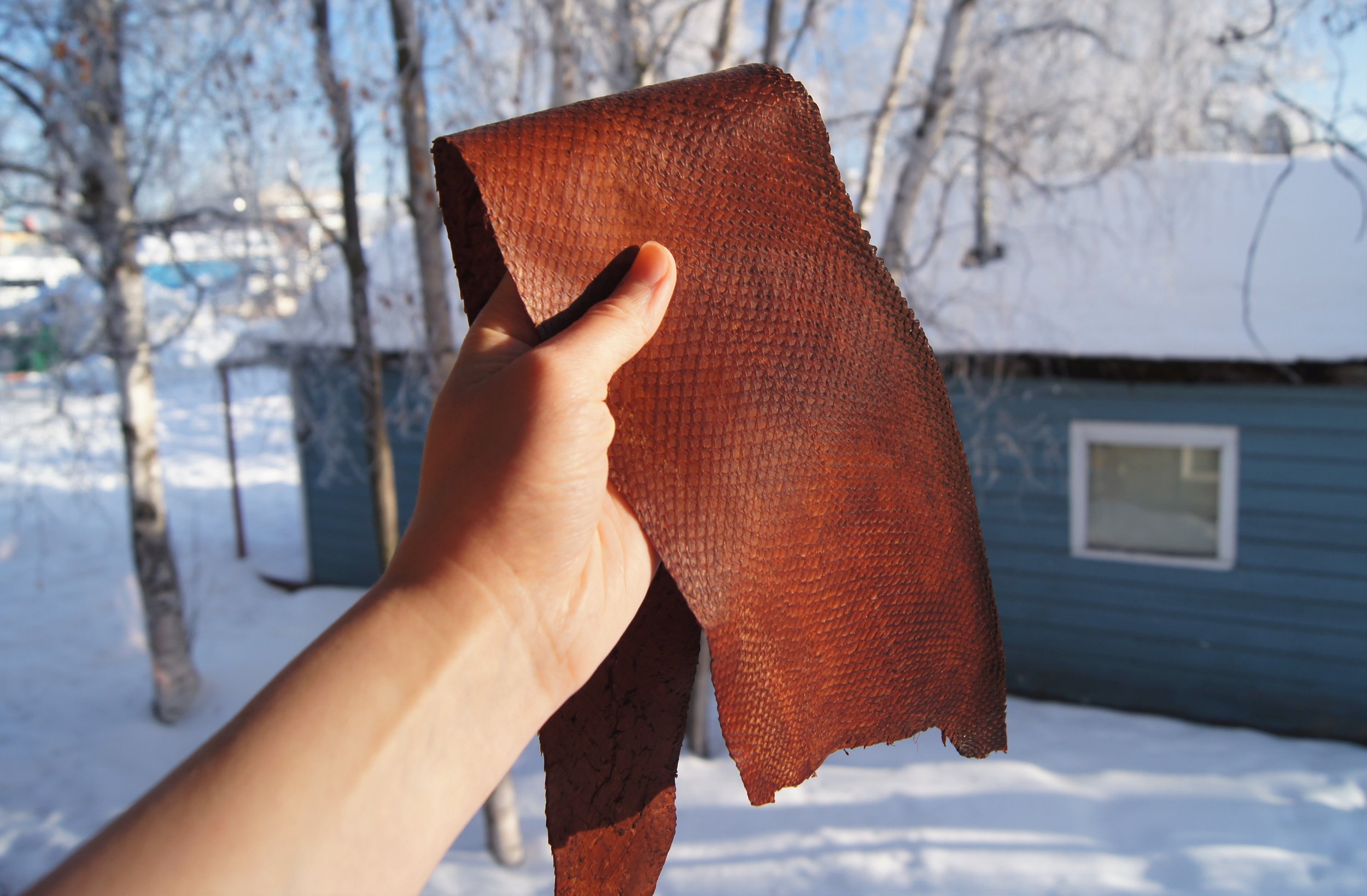
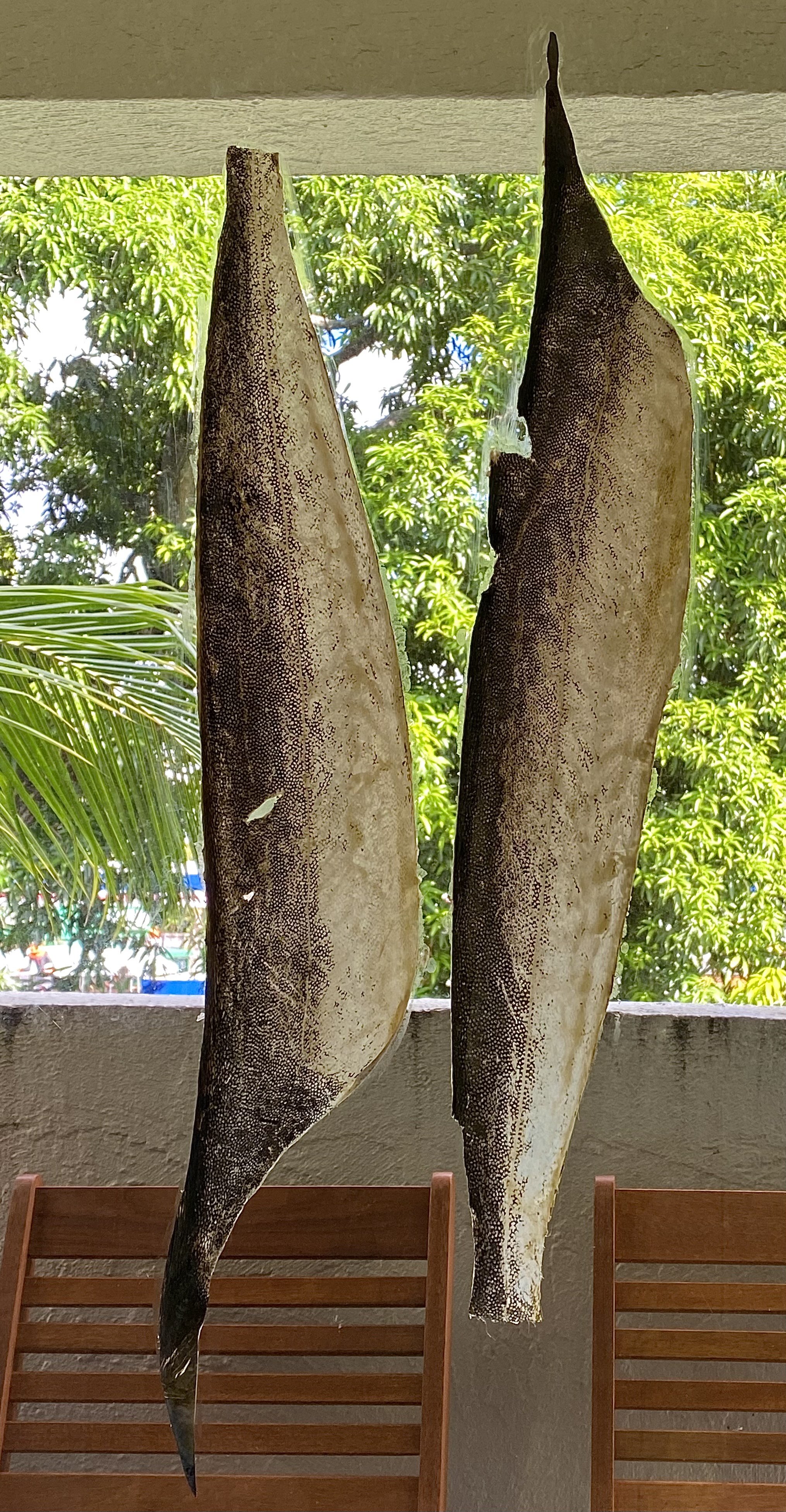
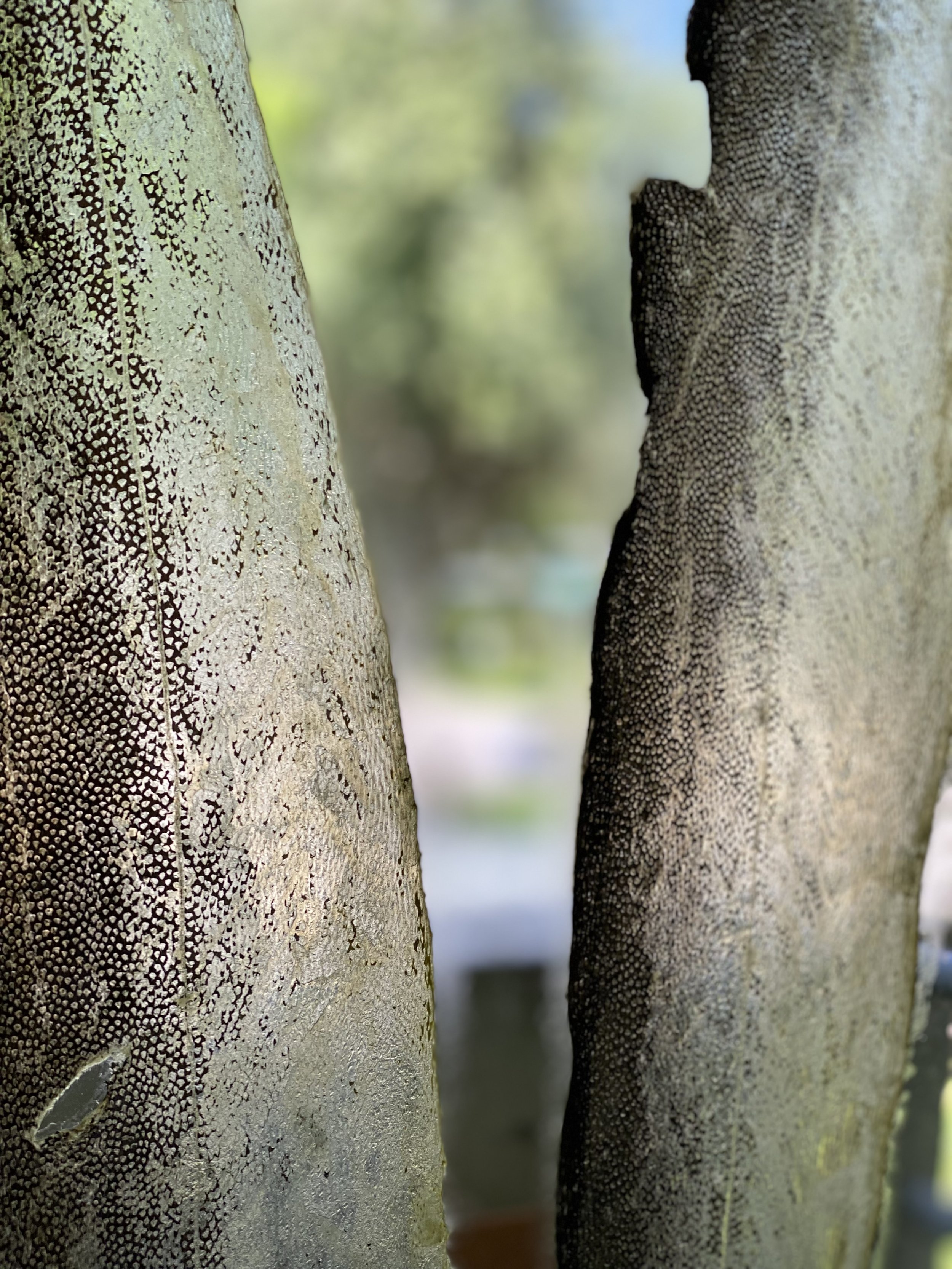
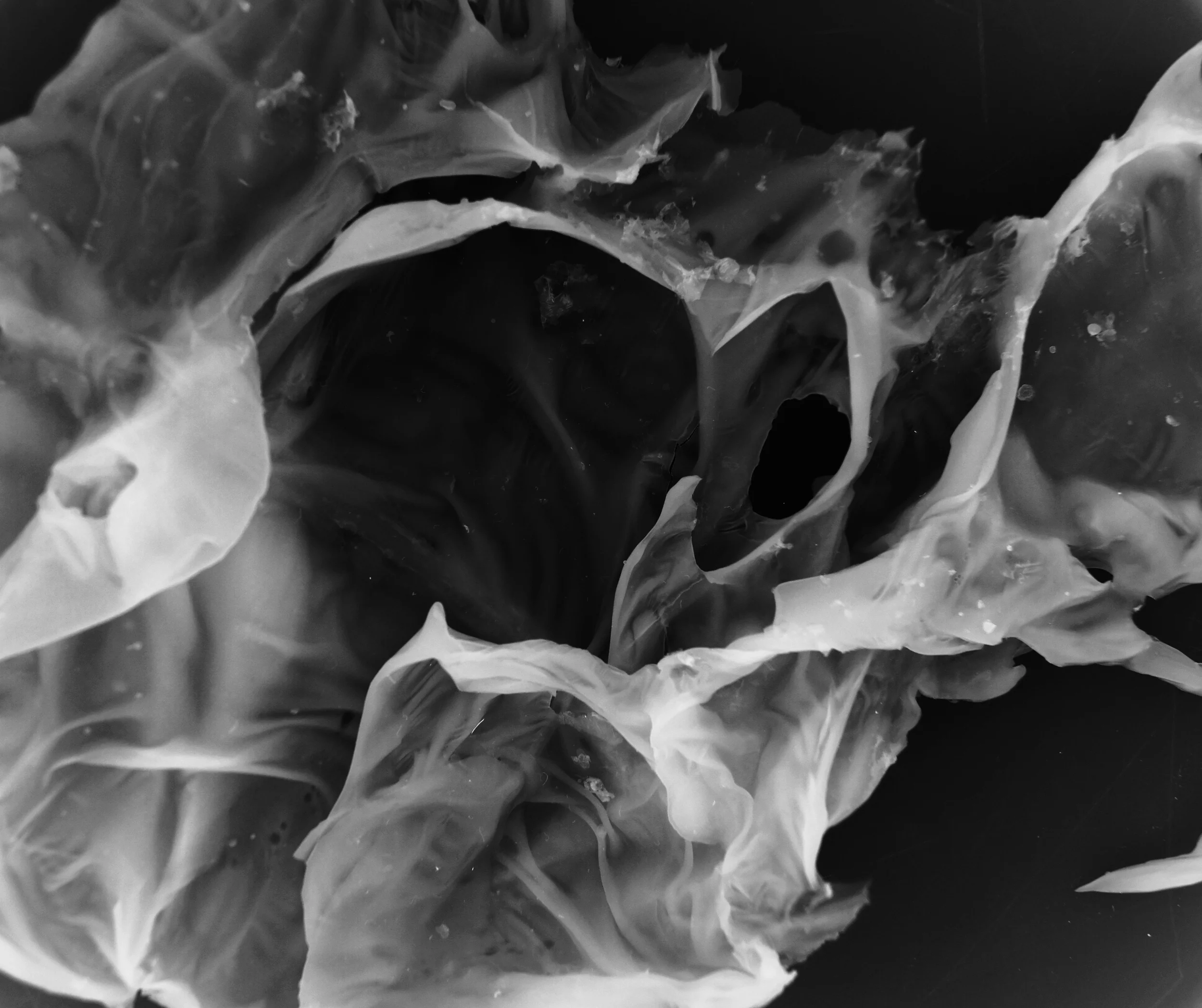
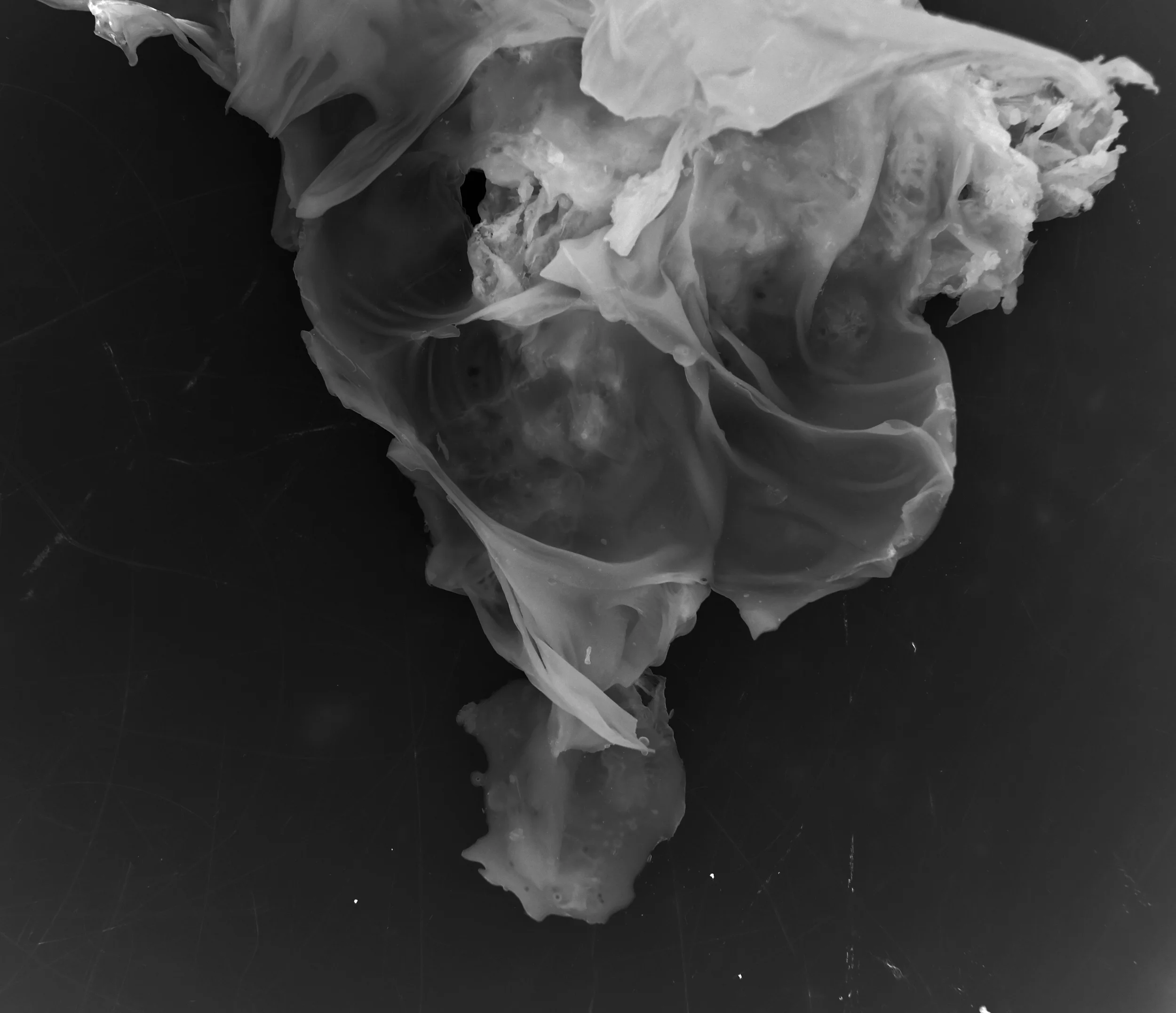
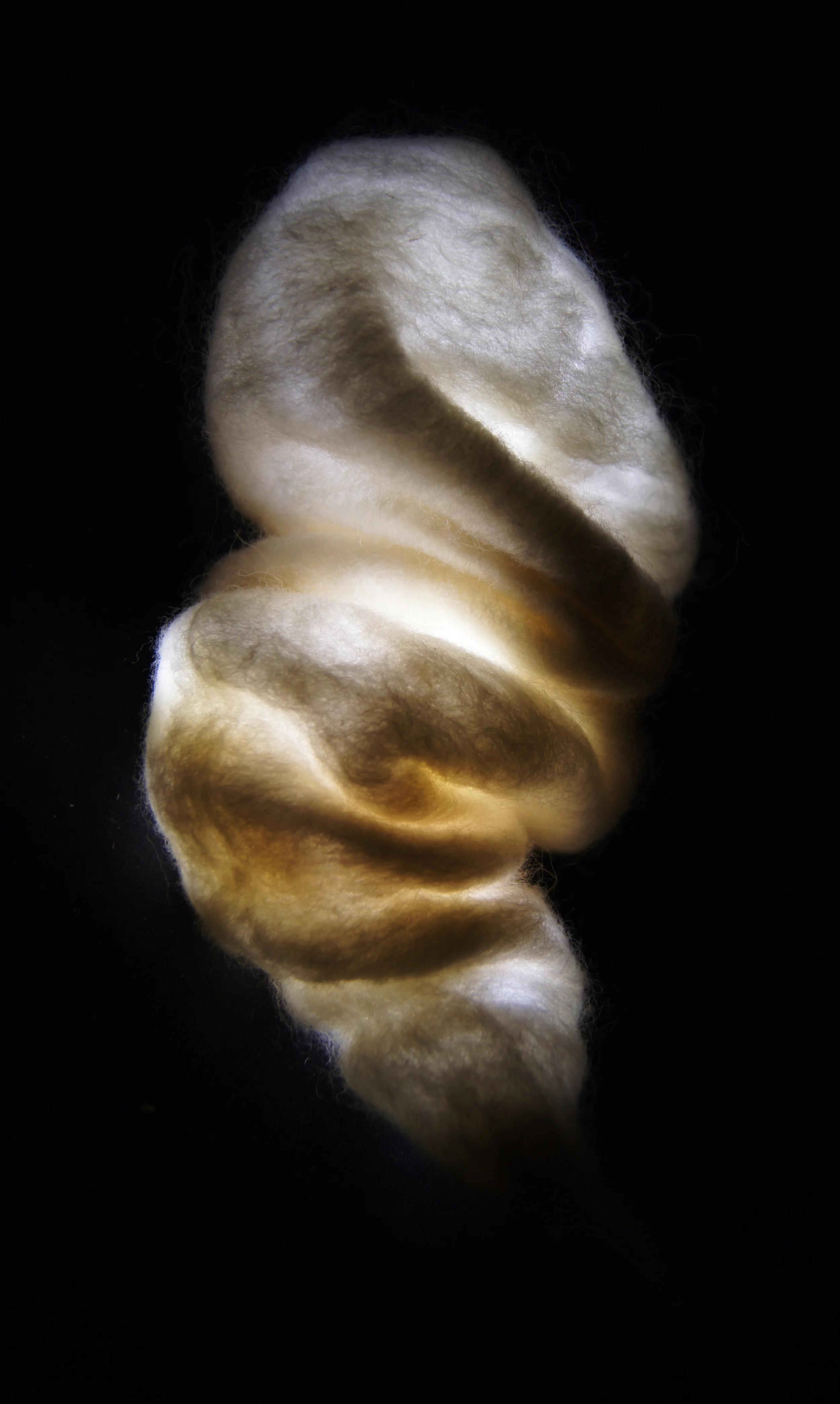
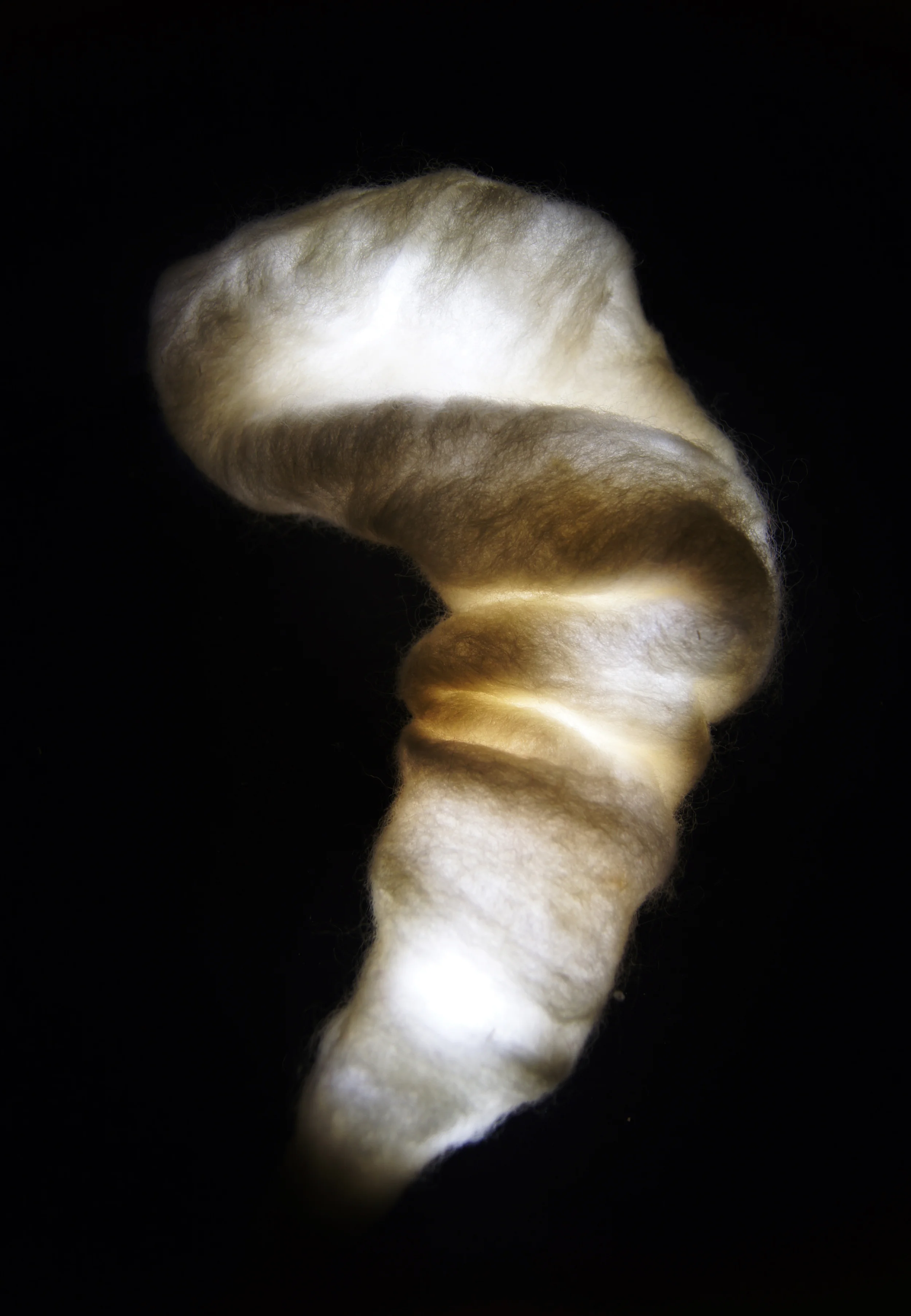
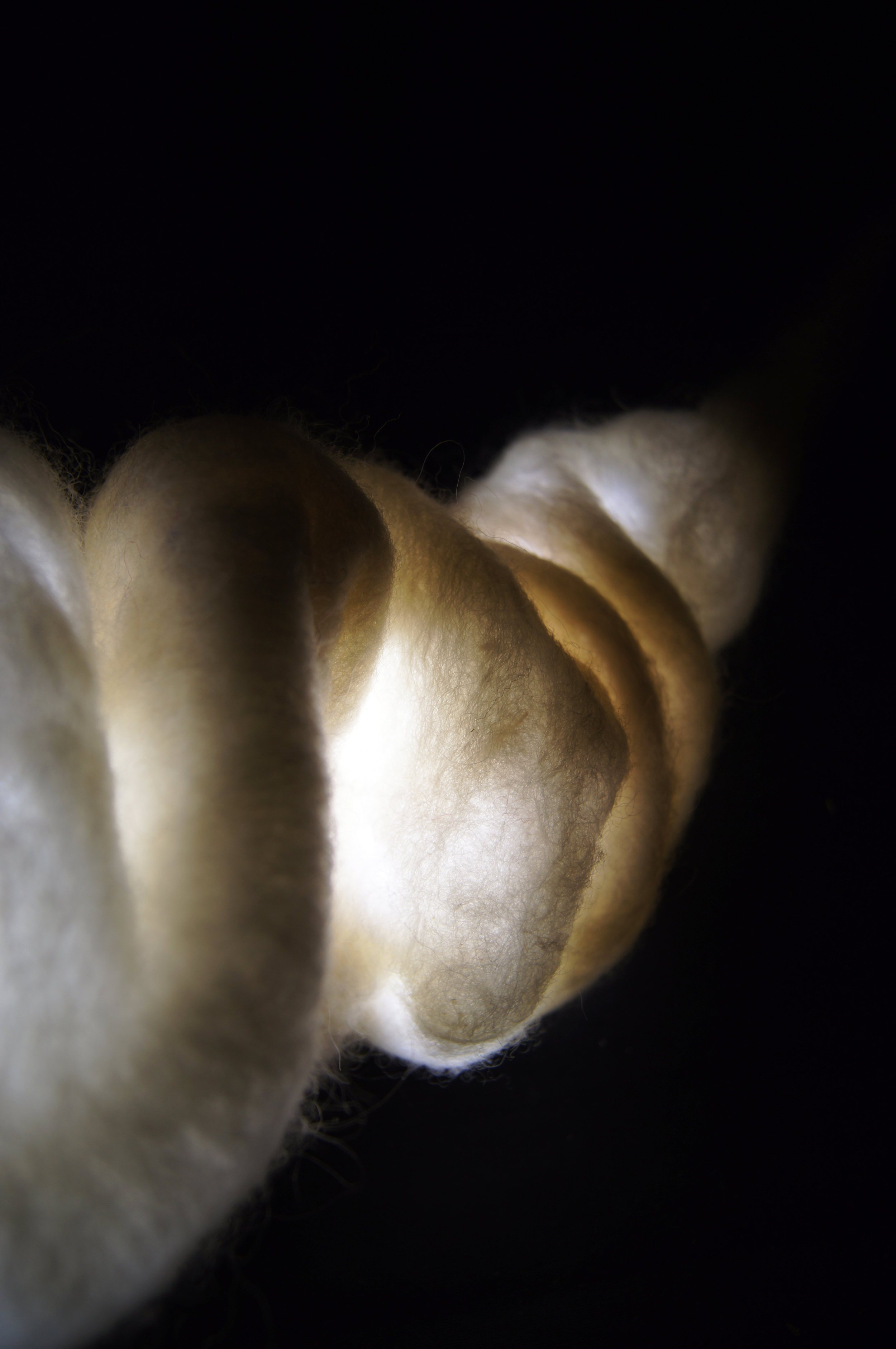
Fish skin is more like a textile that the hide of a mammal (a cow or sheep). The fibers of cow and sheep hides run unidirectionally, while the skin of a salmon is comprised of woven fibers. Once the fat between the skin and flesh is removed, the skin is soaked in a salt water bath to stymie bacterial growth. In leaf tanning, the skin is left to soak in a tannic solution (like tea) for at least a week. The tannins prevent disintegration by binding to the protein collagen in the fibers. In oil tanning, the skin is processed, coated in coconut oil and then left to oxidize in a warm, sunny spot. This creates aldehydes that link the collagen chains that make-up the fish skin, strengthening and preserving it into leather.
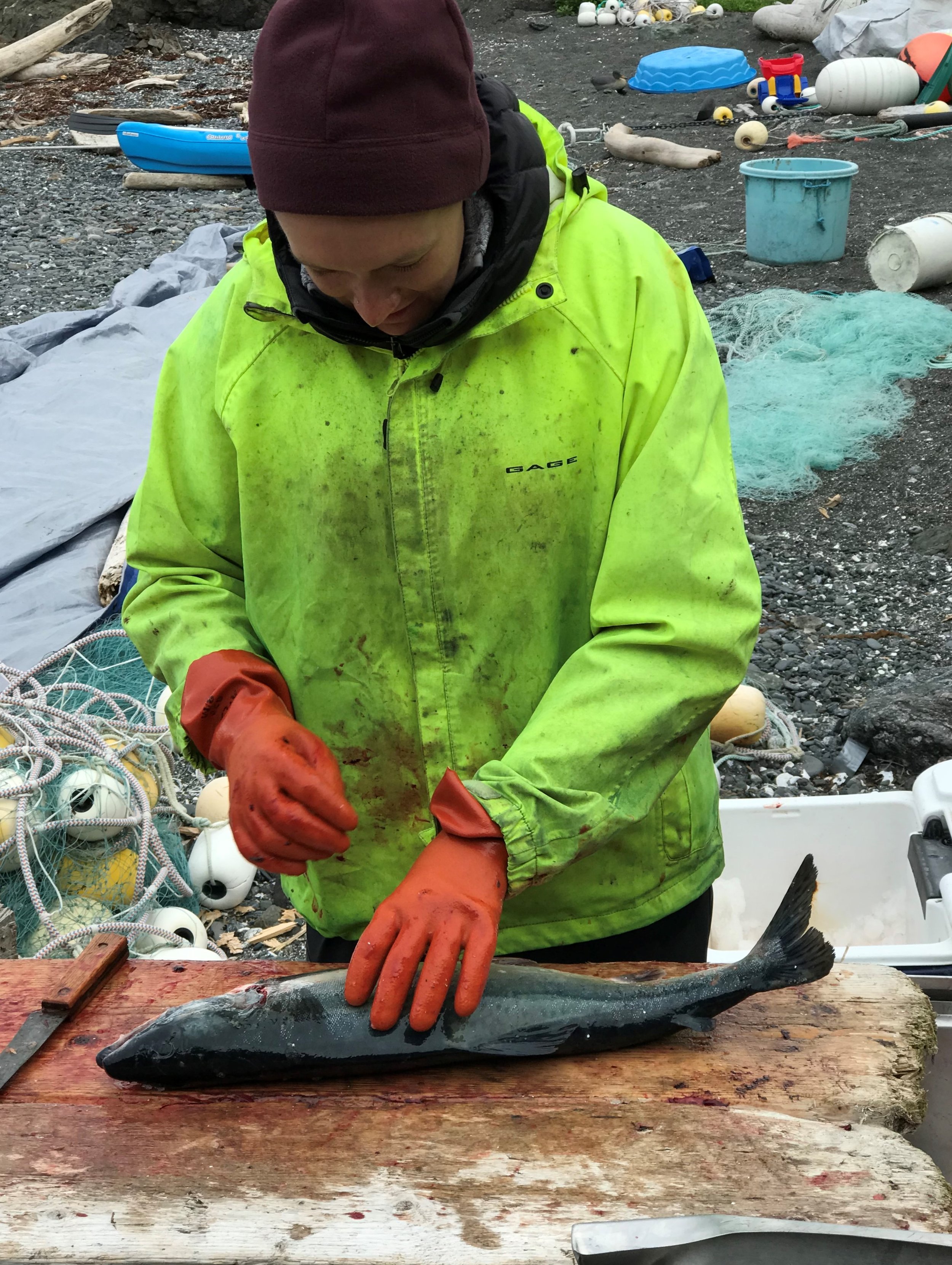
Alaskan salmon processing
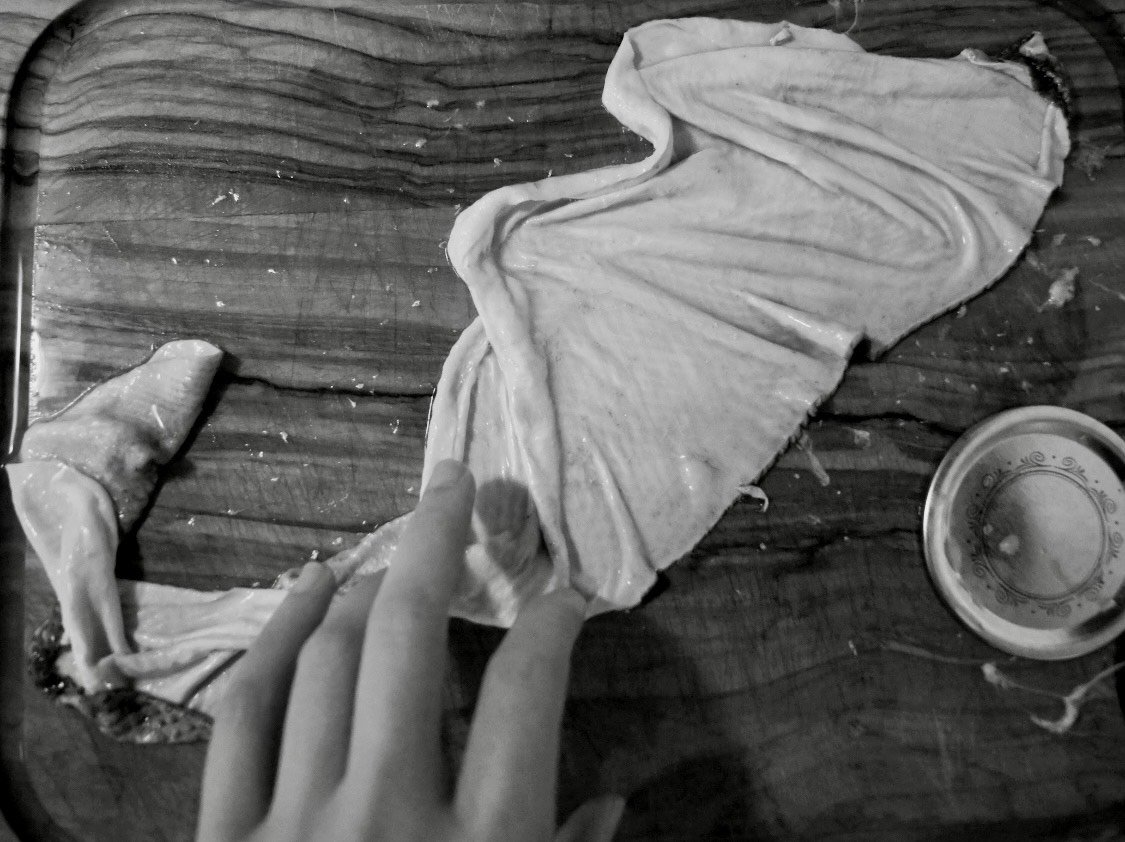
Removing the fat from the salmon skin
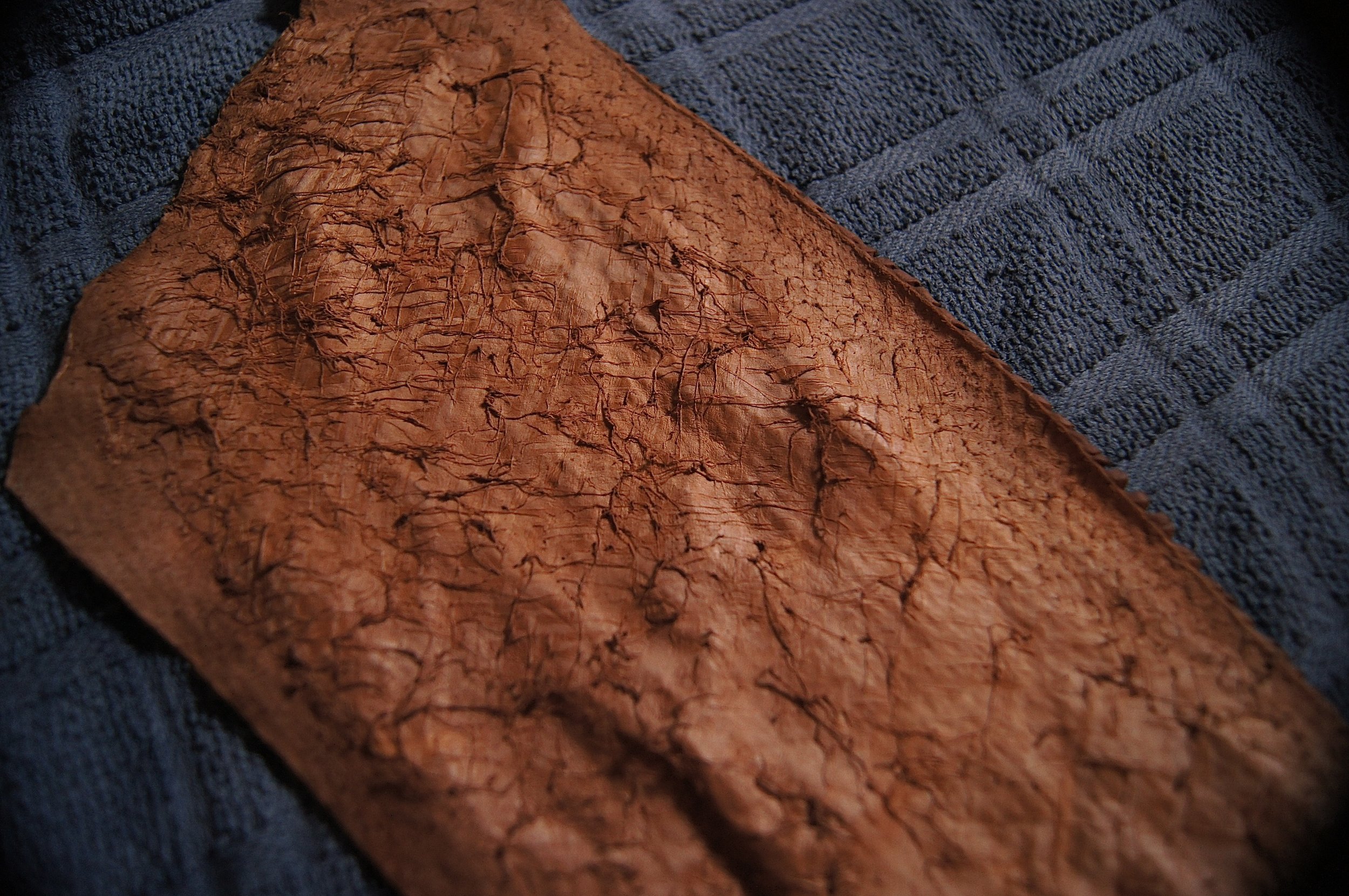
Processed salmon skin
Cleaning and soaking the processed salmon skin
Salmon skin after a week long tannic bath
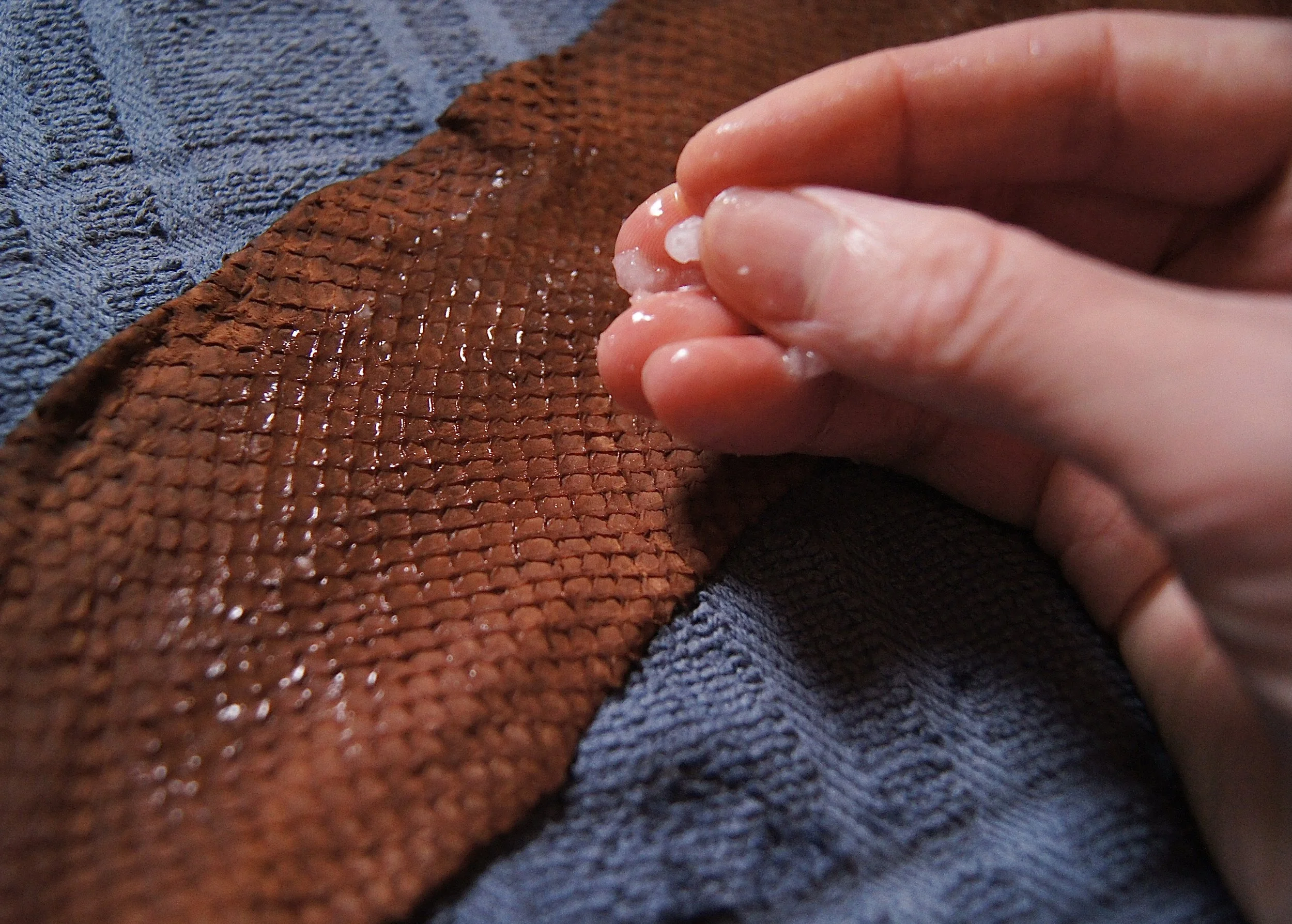
Rubbing coconut oil into the salmon skin to make it supple
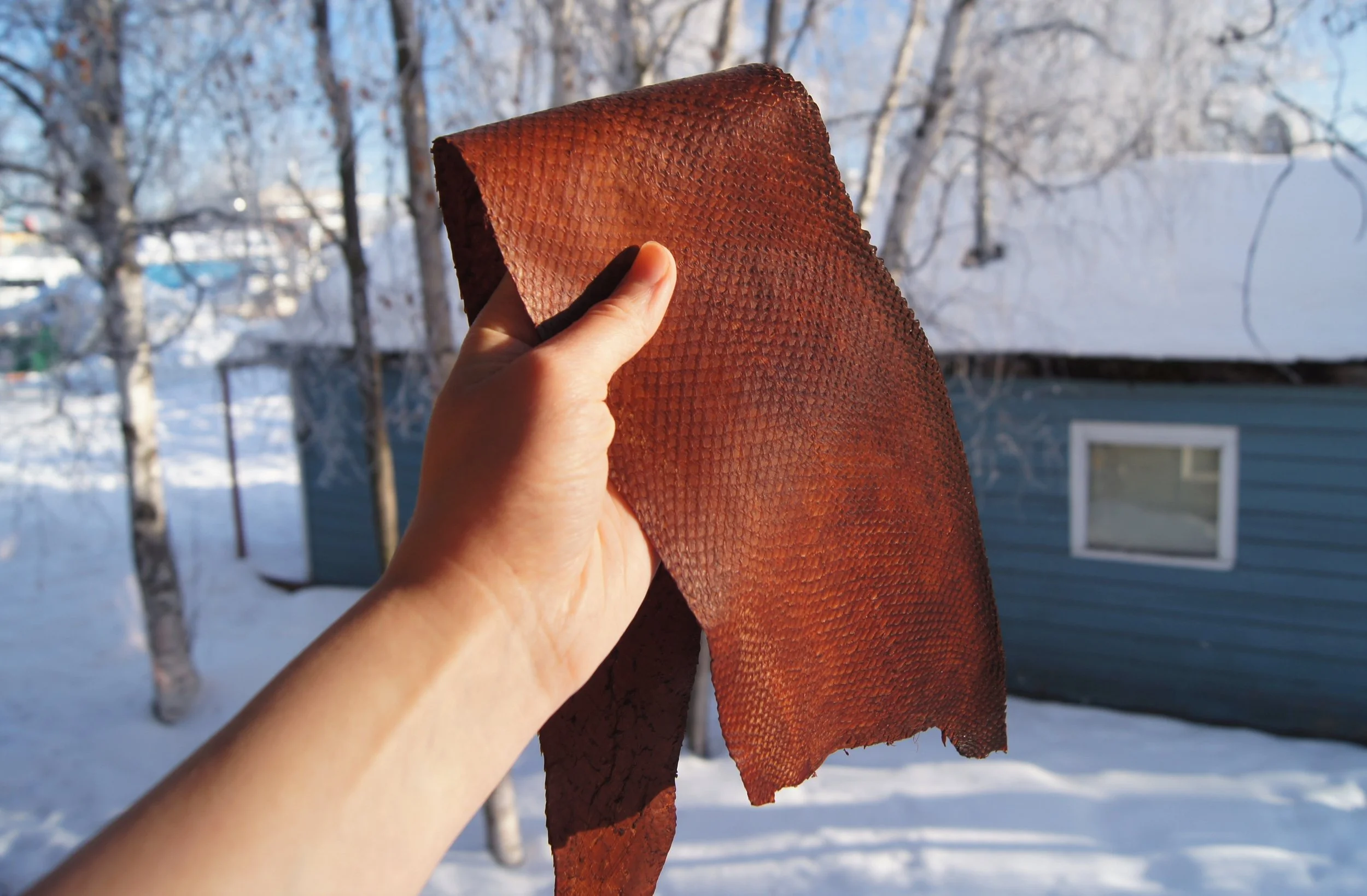
Finished piece of salmon leather
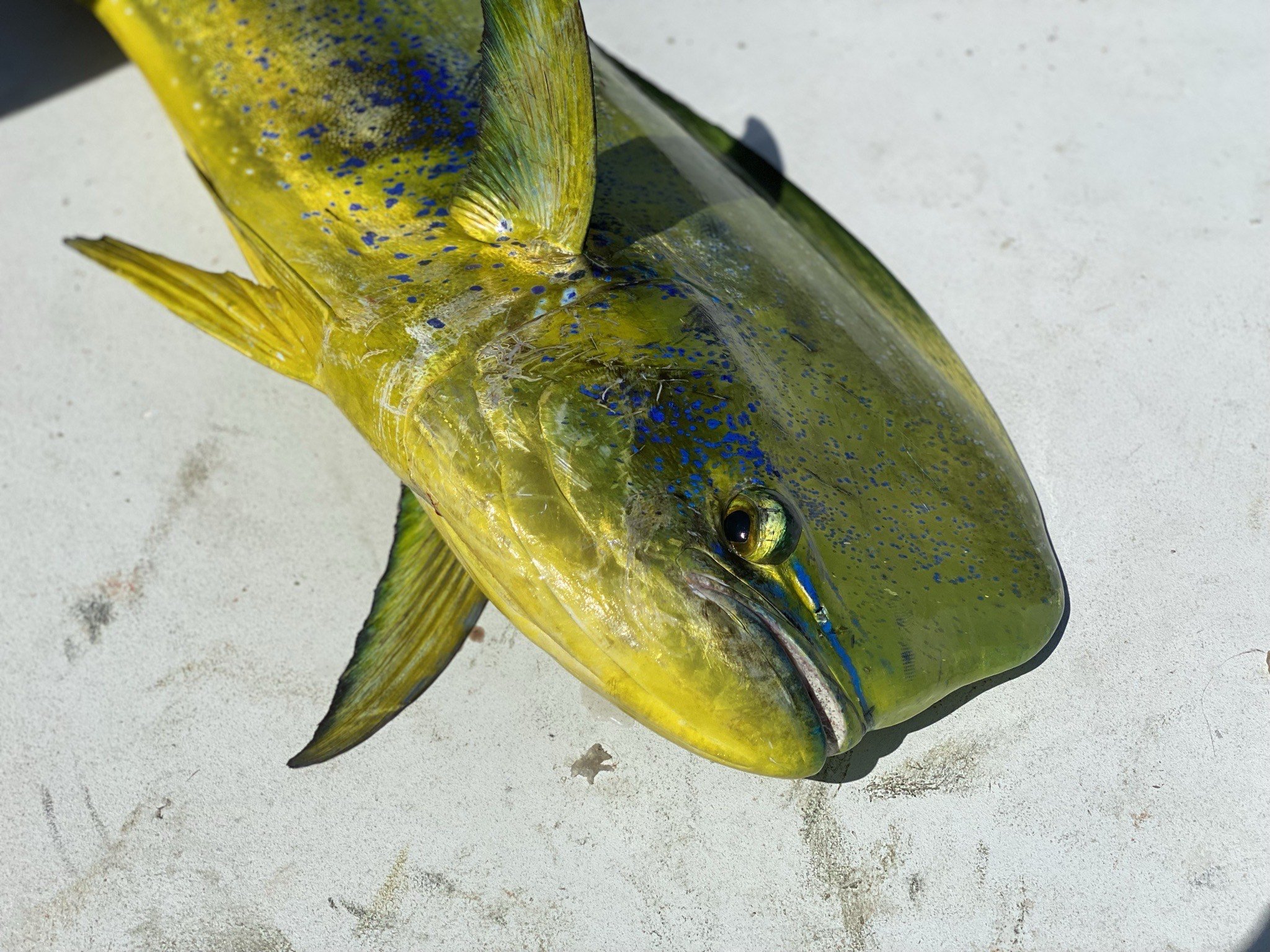
Fresh caught mahi mahi, Miami, Florida
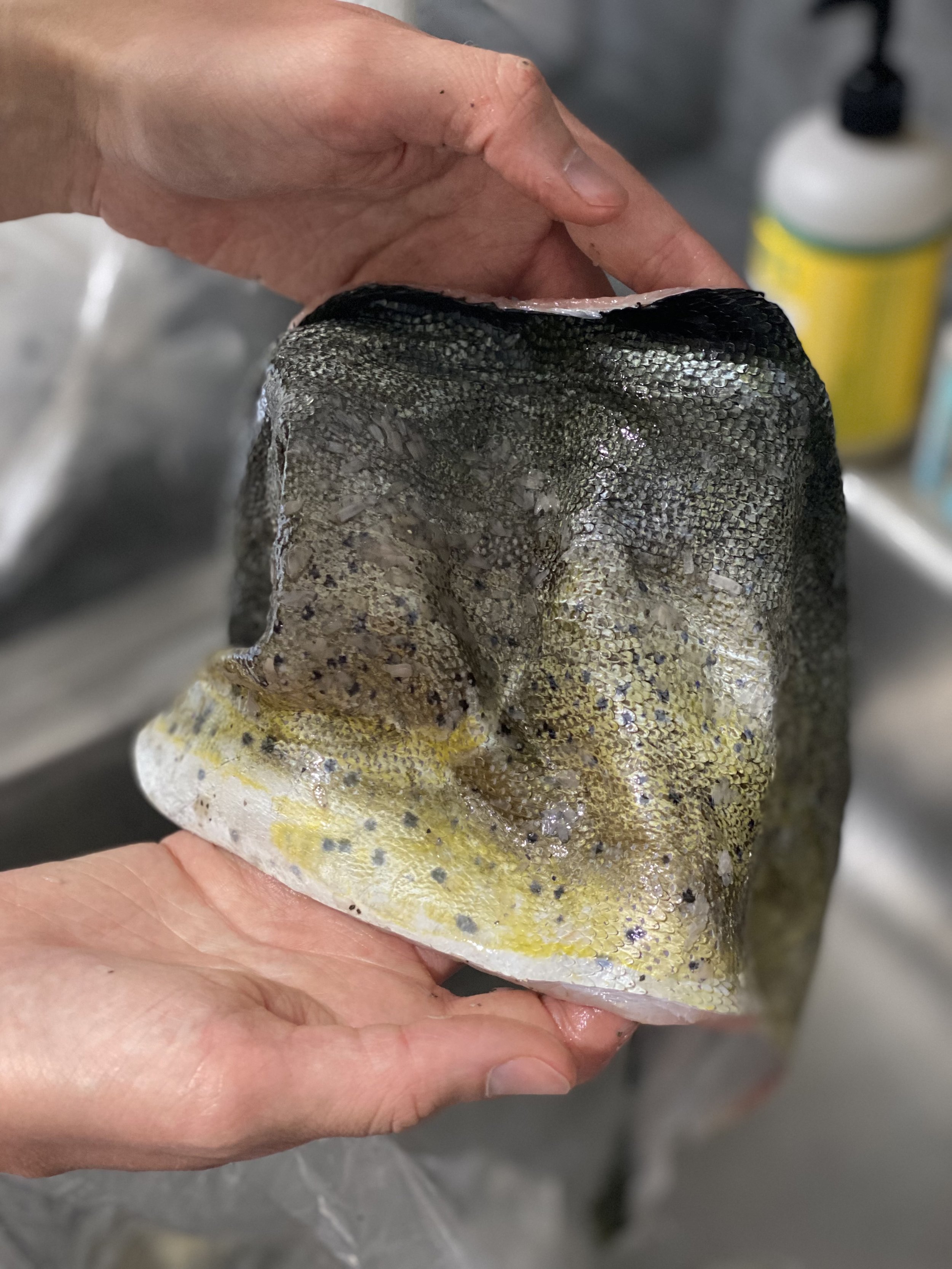
Mahi mahi skin
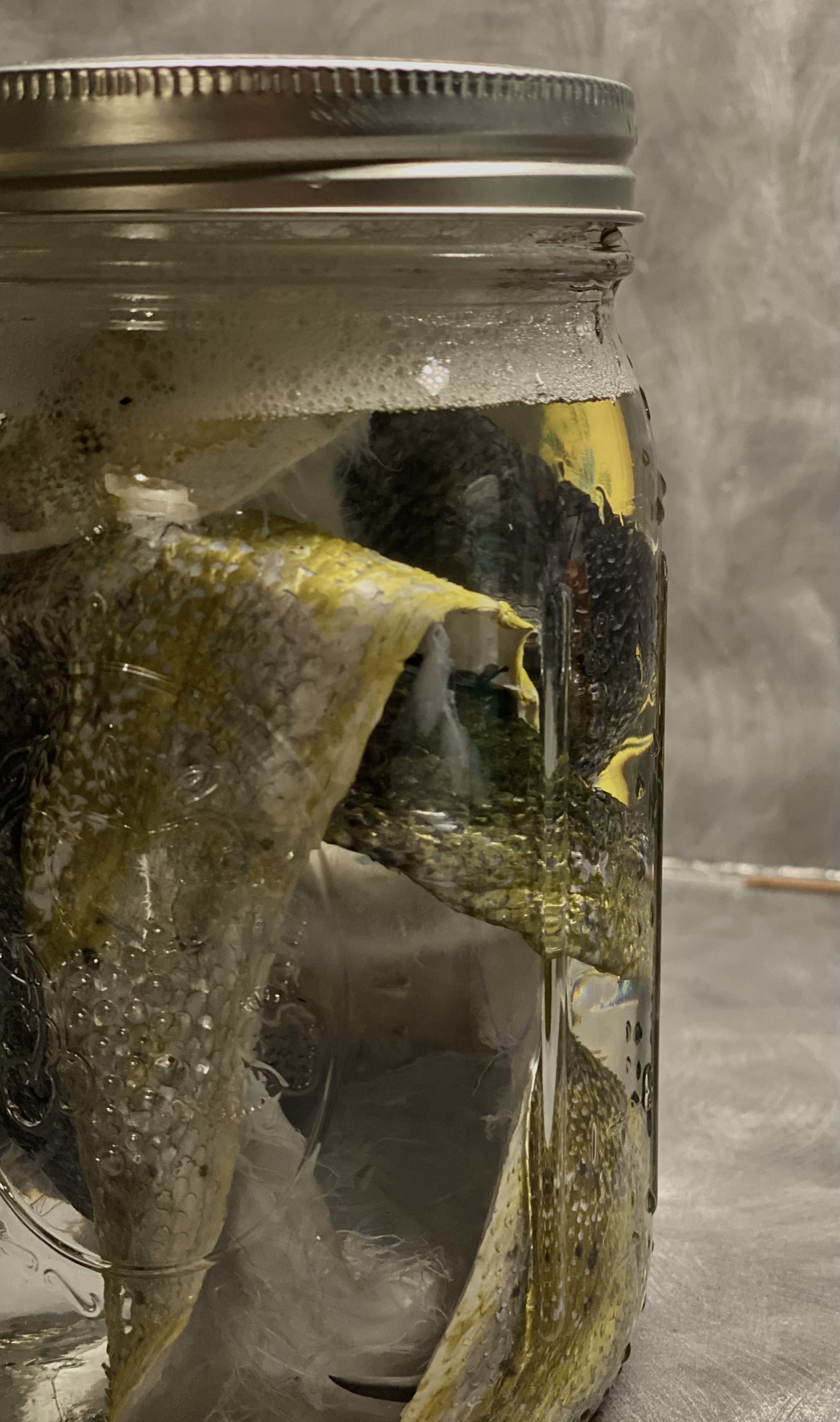
Cleaning and soaking mahi skin
UV setting the mahi skin
UV setting the mahi skin